
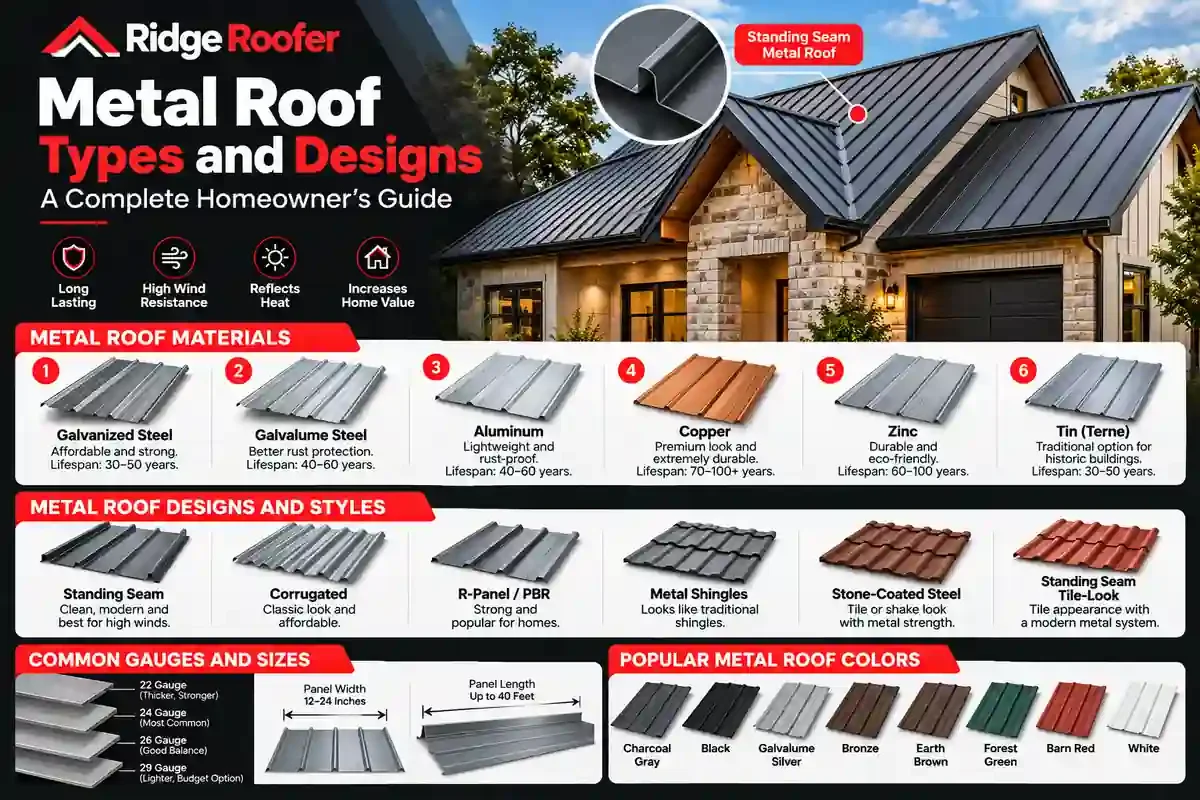
Metal roofs come in different materials (steel, Galvalume, aluminum, copper and zinc), designs (standing seam, corrugated, R-panel, metal shingles and stone-coated steel), sizes (usually 22 to 29 gauge, with 12 to 24 inch panels) and dozens of colors. For most homes in Beaumont, TX, a 24 or 26 gauge Galvalume standing seam roof with a light, heat-reflective color offers the best mix of hurricane resistance, energy savings and value.
Why Homeowners Should Understand Metal Roof Types
Metal roofing has become one of the fastest-growing roofing choices in the United States, and for good reason. A quality metal roof can last 40 to 70 years, stand up to hurricane-force winds, reflect the hot Texas sun and add real value to your home. But "metal roof" is not one single product. It is a whole family of materials, designs, thicknesses and finishes, and each choice affects how your roof looks, performs and costs.
Knowing the basics before you talk to a contractor helps you:
- Avoid overpaying or underbuying. Two quotes for a "metal roof" can be very different products. One may be thin 29 gauge exposed-fastener panels, the other a heavy 24 gauge standing seam system.
- Choose the right protection for your area. Coastal homes in Southeast Texas face salt air, high humidity and hurricanes. Some metals and designs handle these conditions far better than others.
- Pick a look you'll love for decades. Metal roofs last a long time, so the design and color you choose today will define your home's curb appeal for 50 years or more.
- Understand your warranty. Paint finishes, metal type and installation method all affect what your warranty covers.
- Ask better questions. When you know the terms, you can compare quotes fairly and spot shortcuts.
This guide walks you through everything: the materials metal roofs are made from, the main design styles, the sizes and thicknesses available, and the colors and finishes to choose from.
Metal Roof Materials
The type of metal is the foundation of your roof. It decides how long the roof lasts, how well it resists rust and how much it costs.
1. Galvanized Steel
Galvanized steel is steel coated with a layer of zinc that protects it from rust. It is strong, widely available and affordable, which makes it a common choice for homes, barns and commercial buildings. In coastal areas, the zinc layer can wear faster, so a quality paint finish is important.
Lifespan: 30–50 years. Cost: Low to moderate.
2. Galvalume Steel
Galvalume is steel coated with a mix of aluminum and zinc. This coating gives better long-term rust protection than plain galvanized steel, especially against weather and scratches. Galvalume is the most popular metal for residential standing seam roofs in the U.S. today.
Lifespan: 40–60 years. Cost: Moderate. Best for: Most Texas homes inland of the immediate coastline.
3. Aluminum
Aluminum is lightweight and naturally rust-proof, because it does not contain iron. That makes it the top choice for homes very close to the coast, where salt air can attack steel. It is softer than steel and can dent more easily in hail.
Lifespan: 40–60 years. Cost: Moderate to high. Best for: Waterfront and coastal homes.
4. Copper
Copper is a premium metal known for its stunning look. It starts out a bright penny color and slowly turns brown, then develops a blue-green patina over many years. Copper is extremely long-lasting and often used on high-end homes, bay windows, porches and accent roofs.
Lifespan: 70–100+ years. Cost: Very high.
5. Zinc
Zinc is a durable, eco-friendly metal that forms its own protective layer over time and can "heal" minor scratches. It has a soft blue-grey matte appearance popular in modern and European-style architecture.
Lifespan: 60–100 years. Cost: High.
6. Tin (Terne)
Traditional "tin roofs" were actually steel coated with tin or a tin alloy. True tin roofs are rare today, and most people who say "tin roof" are actually talking about galvanized or Galvalume steel. Terne-coated metal is mainly used for restoring historic buildings.
Metal Roof Designs and Styles
The design, or panel profile, controls both the look of your roof and how it is installed. Some designs hide their screws, while others leave them exposed. This one detail has a big effect on maintenance and long-term leak protection.
1. Standing Seam Metal Roof
Standing seam is the premium choice for homes. Long vertical panels run from the ridge to the eave, joined by raised seams that stand 1 to 2 inches above the roof surface. The fasteners are hidden under the seams, so there are no exposed screws to loosen or leak.
- Look: Clean, sleek, modern vertical lines
- Types: Snap-lock (panels click together) and mechanically seamed (seams are folded closed with a tool for maximum wind resistance)
- Best for: Modern farmhouse, contemporary and high-end homes; hurricane-prone areas
- Lifespan: 40–70 years
2. Corrugated Metal Roof
Corrugated panels have a classic wavy pattern of rounded ridges. They are lightweight, affordable and easy to install, and they give a rustic or industrial look. Screws are exposed and need occasional checking.
- Best for: Barns, sheds, patios, rustic homes and budget projects
- Lifespan: 25–40 years
3. R-Panel and PBR Panel
R-panels have tall, squared-off ribs spaced about 12 inches apart. PBR (Purlin Bearing Rib) is a stronger version with an extra overlap leg for better weather sealing. Both are exposed-fastener systems known for strength and value.
- Best for: Shops, garages, commercial buildings and budget-friendly homes
- Lifespan: 25–40 years
4. 5V Crimp Panel
5V crimp panels have five V-shaped ridges and a traditional, old-Southern look. They are popular on coastal and cottage-style homes along the Gulf Coast.
- Best for: Beach houses, cottages and historic-style homes
5. Metal Shingles
Metal shingles are smaller interlocking pieces stamped to look like traditional asphalt shingles, wood shake or slate. They give the classic look of a regular roof with the strength of metal.
- Best for: Homeowners who want metal performance without the "metal look"
- Lifespan: 40–60 years
6. Stone-Coated Steel
Stone-coated steel panels are coated with crushed stone granules and shaped to look like clay tile, wood shake or architectural shingles. The stone surface reduces rain noise and adds texture, and the panels interlock for excellent wind and impact resistance.
- Best for: Hurricane and hail zones; homeowners who want a tile or shake look
- Lifespan: 40–70 years
7. Metal Tile (Spanish Tile Profile)
Metal tile panels are pressed into the curved shape of Spanish or barrel tile. They give Mediterranean style at a fraction of the weight of real clay.
Metal Roof Sizes: Gauge, Panel Width and Length
Size in metal roofing means three things: how thick the metal is, how wide each panel is and how long it runs. These details affect strength, appearance and price.
Gauge (Thickness)
Metal thickness is measured in gauge. The lower the gauge number, the thicker and stronger the metal.
| Gauge | Approx. thickness | Typical use |
|---|---|---|
| 22 gauge | 0.030 in | Premium standing seam, high-wind coastal homes, commercial |
| 24 gauge | 0.024 in | High-quality residential standing seam; top choice for hurricane areas |
| 26 gauge | 0.019 in | Standard residential panels and metal shingles; good value |
| 29 gauge | 0.014 in | Budget exposed-fastener panels, sheds and outbuildings |
For homes in Beaumont and along the Gulf Coast, we generally recommend 24 or 26 gauge for the best balance of wind resistance, dent resistance and cost. Thinner 29 gauge metal is fine for a shed but is easier to dent and oil-can (show wavy distortion).
Panel Width
- Standing seam: usually 12 to 18 inches wide. Narrower panels (12–16 in) look cleaner and resist wavy "oil canning" better.
- Corrugated, R-panel and PBR: usually 26 to 36 inches wide, covering more area per sheet.
- Metal shingles and stone-coated panels: small individual pieces, often around 12 x 50 inches.
Seam Height
Standing seam ribs are usually 1 inch, 1.5 inches or 2 inches tall. Taller seams handle heavy rain and wind better and are common on low-slope roofs and hurricane-rated systems.
Panel Length
Standing seam panels are often custom-cut to run in one piece from the ridge to the eave, sometimes over 40 feet long. Fewer joints mean fewer places for water to get in.
Metal Roof Colors and Finishes
One of the biggest advantages of metal roofing is the wide range of colors. Most manufacturers offer 20 to 40 standard colors, and some offer custom options.
Popular Metal Roof Colors
- Charcoal and dark gray: The most popular choice today. Modern, clean and pairs with almost any siding.
- Matte black: Bold and dramatic, especially on modern farmhouse homes with white siding.
- Galvalume (bare silver): Natural unpainted metal with an industrial or rustic look and very high heat reflection.
- Bronze and dark brown: Warm, traditional colors that blend with brick and stone homes.
- Light gray, white and tan: Reflect the most sunlight and keep homes cooler, a big plus in Texas.
- Barn red, forest green and ocean blue: Classic colors for rustic, coastal and country homes.
- Copper-tone and weathered finishes: Give the look of aged copper or rusted metal without the cost.
Paint Finishes and Coatings
The paint system matters as much as the color, because it protects the metal and keeps the color from fading.
- PVDF (Kynar 500®): The premium finish. Excellent fade and chalk resistance, often backed by 30 to 40 year color warranties. Best for long-term color stability under strong Texas sun.
- SMP (Silicone-Modified Polyester): A good mid-range finish with solid durability at a lower price. May fade more over time than PVDF.
- Polyester: Basic, budget finish used on lower-cost panels and outbuildings.
- Textured and matte finishes: Reduce glare and hide minor surface marks.
Cool Roof Colors and Energy Savings
Many metal roof colors are made with special heat-reflective pigments, often called cool roof coatings. These reflect more of the sun's heat, even in darker shades, which helps keep your attic cooler and can lower air-conditioning costs. Look for products rated by ENERGY STAR® or the Cool Roof Rating Council (CRRC) when energy savings matter.
Tips for Choosing a Color
- Match or contrast with your siding, trim and stone. Dark roofs pop on light homes; lighter roofs soften dark exteriors.
- Check HOA rules, as many neighborhoods limit roof colors.
- Look at real panel samples outdoors, in both sun and shade, before you decide.
- Think long-term: a timeless neutral will look good for decades and can help resale value.
Choosing the Right Metal Roof for a Texas Home
Southeast Texas weather is tough on roofs. Here is what matters most when choosing metal roofing in Beaumont and nearby areas:
- Wind rating: Choose a system tested for high winds, such as mechanically seamed standing seam or interlocking stone-coated steel, installed to local building codes.
- Rust protection: Galvalume works well for most homes. If you live very close to saltwater, ask about aluminum.
- Heat: Pick a cool-roof color and a PVDF finish to reflect heat and resist fading.
- Hail: Thicker gauges and stone-coated steel resist dents better. Look for UL 2218 Class 4 impact ratings, which may help with insurance discounts.
- Noise: With solid decking and underlayment, a metal roof is usually no louder than other roofs during rain.
Metal Roof Designs at a Glance
| Design | Fasteners | Look | Lifespan | Cost | Best for |
|---|---|---|---|---|---|
| Standing seam | Hidden | Sleek vertical lines | 40–70 years | High | Modern homes, hurricane areas |
| Stone-coated steel | Hidden | Tile, shake or shingle look | 40–70 years | Moderate–high | Storm and hail zones |
| Metal shingles | Hidden | Shingle, slate or shake look | 40–60 years | Moderate–high | Traditional-looking homes |
| Metal tile | Hidden | Spanish or barrel tile | 40–60 years | Moderate–high | Mediterranean homes |
| 5V crimp | Exposed | Classic Southern ridges | 30–50 years | Moderate | Coastal and cottage homes |
| Corrugated | Exposed | Wavy, rustic | 25–40 years | Low | Barns, patios, rustic homes |
| R-panel / PBR | Exposed | Squared ribs | 25–40 years | Low | Shops, garages, budget builds |
Lifespans and costs are typical ranges and vary by metal, gauge, finish, installation and local weather.
Get a Metal Roof That's Built for Texas
A metal roof is a long-term investment, and the right choice depends on your home, your budget and your style. Our family-owned team has more than 20 years of experience protecting Beaumont homes and businesses from hurricanes, storms and the Texas sun. We'll help you compare materials, designs, gauges and colors, show you real samples and give you an honest, upfront quote with no hidden costs.
Call us today to schedule your free metal roof inspection and estimate.
Talk to a Beaumont roofer
Free inspection and a written estimate. Office 8 AM – 8 PM, 24/7 emergency support.
Call (409) 262-0156